Saturday, March 12, 2011

Please Ignore Vera Dietz

Please Ignore Vera Dietz
by A.S. King
Knopf, 2010. 336 pgs.
Young Adult Fiction
Hardcover: $16.99

Annotation: When Charlie dies, Vera Dietz is the only one who knows the mystery behind his death, but will she find the courage to share the truth?

Summary: Vera Dietz and Charlie Kahn have been best friends since they were four years old. They hike in the woods, climb the Master Oak and even build a tree house together. But each have their secrets to keep. Vera never tells anyone that Mr. Kahn abuses his wife and Charlie never tells anyone that Vera's mom is an ex-stripper, until they reach high school that is. Then Charlie begins hanging out with the detentionheads, falls into the evil clutches of Jenny Flick and everything changes. He starts to believe the lies Jenny tells him and soon Vera and Charlie's friendship is a thing of the past, solidified when he hits Vera--exhibiting the traits he never wanted to inherit from his father and ensuring that Vera will never talk to him again. But Vera does talk to him one last time--the night the pet store burns down and the night that Charlie dies. "Please Ignore Vera Dietz" is the history behind the mystery of Charlie's death, his acquaintance with a creepy pervert and his slow slide into loserdom and lostville. But it's Vera's story too and she must work out her own demons as she finishes up her senior year and works full time as a pizza delivery techinician, all the while trying to come to terms with Charlies' betrayal, his death and her mother's leaving when she was twelve years old.

Evaluation: King tells a horrible story in a remarkably compelling manner. She rotates chapers from alternative points of view: Vera, Charlie (now dead), the Pagoda (a town landmark) and Vera's dad. It all works amazingly well and each chapter provides another piece of the puzzle that King slowly helps the reader put together. It's dark, dark, dark and yet there are wonderful moments of humor and triumph. Vera is sarcastic, smart, tough, but emotionally fragile and trying to survive this craziness. She's a superb protagonist and someone to love, even if you can't relate to her crazy life and especially if you can. I loved Vera's use of her vocabulary words and the way she would say "Parsimonious. Here is me using parsimonious in a sentence. My dad is so parsimonious he won't buy anything without a coupon." Vera and her dad have a fascinating relationship, but all the peripheral characters are well-wrought too. We have Mr. Dietz: Zen master who can't get over his wife's leaving and reader of self-help books; James: Vera's pizza 23-year-old pizza colleague, make-out partner and booz-buyer; Marie: the pizza manager with crazy teeth but a sweet disposition; the animal lovers at Zimmermans; Bill Corso: the deadbeat jock who can't read, Mr Kahn: wife-beater and stultifier of all dreams; and then there are all the people Vera delivers pizza to. King excels at character creation. In effect, "Please Ignore Vera Dietz" is pure genius.

Significance: It's a gripping story, horrifying and deadly serious as it tackles teen alcoholism, perversion, abuse, drugs, love, death and all the terrors we wish young adults never needed to know about, but sadly do. The book discusses destiny and whether or not we are forced to follow in our parent's footsteps because of our genes or whether we can break the cycle and live our own dreams. It portrays a teen-parent relationship as fallible, but ultimately salvageable and honors some adults, even when others are complete idiots. It is real, honest and definitely not for the faint of heart.

Personal Choice: One of my best friend's last name is Dietz and she urged me to read the book and tell her what I thought before she dared read it. My advice to her?...don't read it if you're in the mood for something light and fluffy because you won't find it here. It's a heavy, edgy story but stunning and eventually hopeful and one that deserves high honors.

Awards: Printz Honor Award, 2011

Friday, March 4, 2011

Ballet for Martha: Making Appalachian Spring

Ballet for Martha: Making Appalachian Spring
by Jan Greenberg and Sandra Jordan
Illustrated by Brian Floca
Flashpoint, 2010. 48 pgs
Reading Level: ages 9-12
Hardcover: $17.99

Annotation: Learn about the inspiration behind Martha Graham's most famous ballet in this beautifully illustrated work of poetic luminance.

Summary:  For more than 60 years, audiences have delighted in Martha Graham's famous ballet, Appalachian Spring. Ballet for Martha tells the story of it's creation and the collaboration that took place between three amazing artists: the famous musician Aaron Copland, Martha herself and the artist, Isamu Noguchi. This informative children's book traces the history of a new kind of ballet, where the "legend of American living" was to be danced out on stage, celebrating Springtime and the marriage of a young pioneer couple. Copeland's famous musical score lent the ballet inspiration and his penned notation at the top of the music "Ballet for Martha" lent the book it's name. Each stage of the ballet's creation is documented, from the costume choices and stage design to the reception the ballet received on opening night in 1944.

Evaluaton: Brian Floca's lustrous watercolors perfectly complement the stunning and poetic cant of this fascinating history of Martha Graham's Appalachian Spring. The title is a welcome addition to history in general and the arts specifically, finishing with wonderful biographies of all three collaborative artists: Martha Graham, Aaron Copland, and Isamu Noguchi. It is an outstanding work of nonfiction and much deserves the Siebert Honor.

Significance: Appalachian Spring enjoys a loving and prominent place in the history of modern ballet and Copeland won the Pultizer Prize with this famous musical score. This book is a beautifully rendered history of a significant event in the history of the arts and deserves a prominent place in any library.

Personal Choice: Having a background in ballet and modern dance I was anxious to read more about Martha Graham and learn about her famous Appalachian Spring. I love Aaron Copeland's music and was thrilled to learn more about his use of "Tis a Gift to be Simple..." in the ballet score.

Awards: Robert F. Siebert Informational Book Honor, 2011

Friday, February 25, 2011

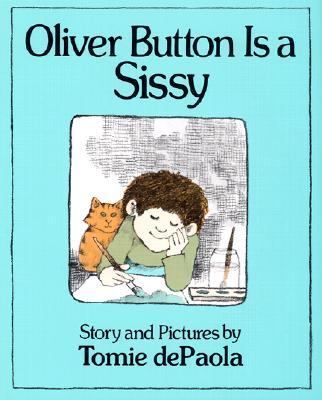
Oliver Button is a Sissy

Oliver Button is a Sissy
written and illustrated by Tomie dePaolo
Harcourt Childrens Books, 1979. 48 pgs.
Reading Level: ages 4-8
Hardcover: $15.99

Annotation: Oliver Button doesn't like to play football with the other boys, he likes to dance.

Summary: Oliver Button doesn't like to do the things that boys do. He doesn't \
like sports because he is not very good at them. Instead, he loves to read and draw, play with dolls and jump rope in the woods. Oliver Button loves to dress up and pretend he is a movie star and he especially loves to dance. So his mother enrolls him for Ms. Leah's dance class and buys him some shiny new tap shoes. All the boys at school make fun of him and call him a sissy, even his father. But Oliver Button doesn't let that bother him and practices and practices anyway. One day at the local talent show he demonstrates what an amazing dancer he really is. Even though he doesn't win, his father finally tells him he is "great" and the next day at school, instead of being a sissy, he is a star.

Evaluation: Oliver Button is an endearing little boy and the dePaolo's use of both his first and last name is even more charming. But is the illustrations which make Oliver come to life. The tale follows the life of Oliver as he particpates in the things he loves, instead of following what society prescribes. Oliver Button tells an important truth and does so in a manner that children can both understand and learn from, while enjoying the fun and playful nature of dePaolo's artwork.  As the School Library Journal says,  “There is a good balance between the simple text . . . and the expressive pictures . . . an attractive little book.”  Like, Oliver, dePaolo also loved to draw more than play sports and look where that landed him, with numerous awards and this year's Wilder winner.

Significance: It's not easy being different, but this book helps children realize it is okay for boys to like hobbies that have been traditionally assigned to the female gender. Even when everyone is telling you to do one thing, if you follow your heart, it will be okay in the end.

Personal Choice: Admittedly, the title of this book immediately captured by attention and I had to find out just what Oliver Button was up to.

Awards: Laura Ingalls Wilder Winner, 2011 / IRA-CBC Children's Choice

One Crazy Summer

One Crazy Summer
by Rita Williams-Garcia
Amistad, 2010. 224 pgs.
Reading Level: ages 9-12
Hardcover: $15.99

Annotation: As three young sisters set off to visit a mother they barely remember, they can’t imagine the craziness that awaits them.

Summary: Delphine (11), Vonetta (9), and Fern (4) are going to visit Cecile in Oakland, California this summer. Cecile is the woman who gave birth to them, but they never refer to her as their mother because what kind of mother leaves her toddlers and newborn child to fend for themselves? However, their Pa insists they meet her and so they leave the familiarity of New York for the glamour they feel sure is waiting for them in California, home to movie stars, Disneyland and all sorts of amazing adventures. But when Cecile barely acknowledges them at the airport, won’t cook them dinner and never allows them into her kitchen, they know this summer is not going to be what they expected. With no warmth and lots of crazy talk, Cecile sends them to the Center each morning for breakfast, angrily reminding them not to return until dark. At the Center the three black sisters encounter “The Panthers”, a black power movement formed to ignite a revolution and give power back to the people. Charged with the care of her younger sisters, Delphine is wary of becoming involved in such a dangerous cause, but somehow they are pulled into it anyway. But it is through this experience that Delphine and her sisters will finally come to know and understand the woman who is their mother.

Evaluation: One Crazy Summer is a smashing success. Told from the perspective of 11-year-old Delphine, who is equal parts naiveté and wisdom and robust enough a character to ensure that she’ll make a permanent home in your heart. It’s beautifully written with a prodigious sprinkling of humor and the prose will knock you out of your seat. Jacqueline Woodson writes, it “absolutely blew me away.” Williams-Grace presents real characters, real problems and real resolutions. Fantastic research, coupled with engaging characters and a intriguing plot make this book an important addition to the civil rights literature and a must read for everyone.

Significance: Set during the civil rights movement, One Crazy Summer highlights “The Black Panthers” organization and their operations during this tumultuous time period. The book emphasizes an important era in history and highlights the significant contribution that children made and can make in changing our world for the better

Personal Choice: Not only had this book won the Coretta Scott King, but it was also a Newbery Honor and so I knew it had to be something special. I wasn't disappointed in the list and this is now one of my top 5 recommendations for children.

Awards: Coretta Scott King Winner, 2011 / Scott O'Dell for Historical Fiction Winner, 2011/ Newbery Honor Award, 2011 / National Book Award for Young People's Literature Finalist, 2010

The Dreamer

The Dreamer
by Pam Munoz Ryan
illustrated by Peter Sis, read by Tony Chiroldes
Scholastic Press, 2010, 384 pgs.
Reading Level: ages 9-12
Hardcover: $17.99

Annotation: Far from being siple-minded, Neftali is merely dreaming up ways to use the beautiful words that he collects.

Summary: Shy and timid, Neftali Perez likes to read books and collect every interesting thing imaginable (including the words which he writes down on scraps of paper and saves in his dresser). However, Neftali is not strong and this, along his constant daydreaming, infuriates his father who runs the household like a tyrant. Neftali and his brother, sister and stepmother all jump whenever the train whistle sounds the impending arrival of this formidable man. Constantly battling his father's demeaning negativity, Neftali continues to dream and to write, winning school contests and penning love notes the neighborhood bully forces him to write to the prettiest girl in the village. A trip to the sea brings further conflict and Neftali is pulled between disgust for his father--who forces the children to swim in the cold, choppy waters until he blows his whistle--and the beauties of sitting on the sand and listening to the waves swoosh out to sea. But Neftali's uncle is sympathetic and a positive role model. As a newspaper man he encourages Nephtali's writing and introduces him to the plight of the native Mapuche people. In the end, despite his father's glowering opposition, Neftali is offered an internship at his uncle's newspaper and his first published essay is only the beginning of a long career for Chile's most beloved poet and politician.

Evaluation: To be successful, a book about the famous Pablo Neruda should be as beautiful as Neruda's poetry. Luckily, The Dreamer is just such a book. In a gorgeous collaboration, Ryan supplies the prose while Sis illustrates the book and introduces three magical drawings done in a pointellist style found at the beginning of each chapter, foreshadowing what is to come. Ryan's prose is rhythmic and poetic and a perfect compliment to the life of Neruda. While the biography is fictionalized, the magic and imagery Ryan use conveys a life of beauty and Nephtali / Neruda emerges as a sympathetic character the reader yearns to protect and champion. In short, Ryan manages to convey the wonder of a inquisitive, sensitive mind and demonstrates that dreaming isn't always a disdainful waste of time.

Significance: The book is a beautiful, magical--although fictionalized--introduction to the younger years of Pablo Neruda and it demonstrates that even with severe oppostition to your goals, if you perservere you can achieve wonderful things. In a society where doctors, lawyers and businessman are trumpeted, it is refreshing to see that the product of dreams isn't always measured by money. Moreover, the book fosters an interest in Neruda that will hopefully lead children to examine the beauty of his poetry.

Personal Choice: I fell in love with Pablo Neruda after watching Il Postino--which tells the story of a simple postman who learns to love poetry as he delivers Pablo Neruda's mail each day.

Awards: Pura Belpre Winner, 2011 / Children's Notables for Older Readers

The Freak Observer

The Freak Observer
by Blythe Woolston
Carolrhoda Books, 2010. 208 pgs
Young Adult Fiction
Hardcover: $16.95

Annotation: Loa has not one, but two deaths to contend with and the nightmares and anxiety just keep getting worse.

Summary: Loa is attacked by her toilet plunger wielding father, not because she did anything wrong, but simply because she didn't die. Sometimes fright will do that to a person and he's already lost one daughter. But it wasn't Loa who died that night, it was Edith and now Loa must figure out how to survive the horror of her sister's death and her friend's. She's not doing particularly well though, with horrible nightmares of The Bony Guy, anxiety attacks and the inability to concentrate all contibuting to her dropping grades. Even her best friend Corey has betrayed her by going to Europe to a new school, sending her cruel postcards in the mail and posting shocking internet photos of her in compromising positions. On top of that, when her dad loses his job, she must help support her family doing dishes at the Piney Woods care center. And through it all she has that make-up essay to write for science class about the Freak Observer. Feeling like a freak herself, she's doing all she can to keep it together without going crazy. But it's more difficult than  she imagined and until "the nice boy" shows up, she's not doing a very good job.

Evaluation: Set in a logging community in a small Montana town, Woolston writes about the grieving process as experienced by one very unfortunate girl. Told in a mixture of both present day and numerous flashbacks, the story reveals the crippling nightmares Loa endures as her mind tries to come to terms with Asta and Edith's deaths. The book is particularly realistic in it's treatment of grief, anxiety and the separation from reality that trauma brings. Each chapter begins with a black page on which a science experiment is written, symbolizing several things. One being that Loa herself is attempting to understand her world in terms of a scientific equation; two, that she herself feels like a science experiment; and three, that science is a field where answers should be as easy to determine as a well-wrought equation but, real life often doesn't work that way.

I particularly liked this recipe for grief as given by Loa.

1) Heat the oven to Denial
2) Prepare the pan with a spray of Anger
3) Mix in two medium-size Bargain with The Bony Guy
4) Add 1/3 cup of Depression (tears will do if you want low fat)
5) Bake for 35 minutes, or until you can jab a toothpick in your arm and it seems Acceptable.

I thought Woolston was overly fond of the "f" word, but concede that it's probalby realistic of teens with an anger issue. The backstory of Asta's death and Corey's betrayal was well done and added layers of sorrow and confusion to an already desparing teen. The use of postcards was a particularly clever idea and demonstrated Loa's inability to see beyond her depression. When Loa ultimately realizes she had been connecting dots that weren't there, we see her brain beginning to heal. Loa's research on the freak observers is a nice literary device and mirrors her own disassociation from her world, just as the scientific theory of this discombobulated brain does.

With teen drinking, harsh language, nonchalant teen sex, PTSD and parental abuse the book is dark and inappropriate for all but the most mature teen readers. I feel hard-pressed to recommend it to anyone unless they've experienced death themselves. All said, the book is treats a dark, heavy topic with literary aplomb and even though it's "enormously sad" as Kathe Koja relays, it's an important addition to the body of literature treating the wretched reality of death.

Significance: While there are many teens who make it through adolescence without having to experience the horrors of a sibling or a friend dying, there are the unfortunate number who do not. This book addresses a difficult, important subject and follows a teen as she battles through the grieving process. Eventually, she will learn how to see the world clearly again and rid herself of her debilitating nightmares.

Personal Choice: Being acquainted with death, grief myself, I wanted to see how Woolston would treat the subject. The book wasn't my favorite, but probably realistic as far as the nightmares and PTSD are concerned.

Awards: Morris Winner, 2011

Wednesday, February 23, 2011

The Graveyard Book

The Graveyard Book
by Neil Gaiman
Illustrated by Dave McKean
HarperCollins, 2008. 320 pgs
Reading Level: ages 9-12
Hardcover: $17.99

Annotation: When your parents are ghosts and you're raised in a graveyard, life is both a fascinating and frightening adventure.

Summary: Nobody Owens is the only living boy to make his home in an English village graveyard. After his parents and sister are killed by the man Jack, the littlest child toddles off to a nearby graveyard and at the insistence of his newly dead mother, a ghostly couple agree to adopt the child and raise him as their own. Christened Nobody, "Bod" is reared by his guardian, Silas, and the spirits whose bodies have been layed to rest in the graveyard. He makes friends amongst graveyard dead and leads a peaceful, fascinating life. The graveyard folk raise him as their own, with various spirits giving him lessons of sorts, not always useful to his current time-period, but superbly interesting nonetheless. The graveyard can be a dangerous place though, and after his encounter with a pack of hellhounds and night-gaunts, Bod barely escapes with his life. But one day a live girl enters the graveyard and the two become fast friends. However, it isn't until the girl finds herself back in Bod's life many years later that trouble begins and the man Jack manages to find Bod--setting out to finish the job he started on that long ago night.

Evaluation: Gaiman's work is an outstanding piece of literature and a pure delight of fanastical fiction with lovable characters. Macabre and humorous, the darkness of this ghost story is made light by the delicate touch Gaiman gives his ghostly souls. Humor abounds and the story is appealing to readers of all ages. Listening to the audio version only enhanced the experience, as Gaiman reads his story himself in a delicious English accent with all the right touches of ghostly delight and wry humor. An immenently bittersweet read and a real treasure to enjoy.

Significance: Gaiman tackles the complex world of the orphan and manages to create an enriching experience, teaching us the diffcult truth that sometimes friendships must end and that we must eventually make our own way in the world.

Personal Choice: I've been wanting to read this book ever since my friends and colleagues raved about it and I wasn't disappointed.

Awards: Newbery Winner, 2009 / ABA - Indies Choice - Best Indie YA Book Buzz, 2009