Showing posts with label Children's Books. Show all posts

Wednesday, May 18, 2011

Moon Over Manifest

Moon Over Manifest
by Clare Vanderpool
Delacorte Press, 2010. 351 pgs
Reading Level: ages 9-12
Hardcover: $16.99

Annotation: Abilene searches for traces of her father in the rich history of the town of Manifest.

Summary: It's been just the two of them since Abilene can remember. Her mother left her father, Gideon, and her when she was just a toddler. But when Gideon gets a job on a railroad as she nears her twelfth birthday, he declares it unfit for a girl and sends her off to spend the summer in Manifest, Kansas--the town he grew up in. Abilene's to stay with Shady, the town preacher and an old friend of her father's. When she arrives, she's forced to attend the last day of school, although Abilene can't see the point as she won't be here come fall, but the teacher gives her an assignment anyway--an essay exploring the meaning of the town's name and it's significance. Thrusting that chore to the back of her mind, throughout the summer Abilene finds adventure and friendship in Manifest and visits Miss Sadie, the town's occultist, nearly everyday. Piece by piece Miss Sadie unravels Manifest's glorious, complicated history, focusing on the antics of Ned and Jinks, who were two of the town's most engaging, spirited boys. However, the town seems to hold lots of secrets and Abilene yearns to learn more about her father, but no one seems to want to talk about him and Miss Sadie's stories hold no mention of Gideon. Even though she's perplexed by her father's absence from history, Abilene comes to love Manifest and slowly starts to understand the town's nuances and eventually discovers the truth of her father's past. So when summer ends Abilene has more than enough material to write her essay, because she's learned all of Manifest's secrets and can now tell them from the perspective of someone who belongs.

Evaluation: As a debut author, Vanderpool has written the loveliest of books. Set in the great depression the book alternates between present day 1936 and the town's past in 1918. The backstory is revealed through old newspaper clippings and Miss Sadie's reminiscences until the two eras gracefully intertwine and their secrets made "manifest". An intriguing plot provides lots of pent up curiousity and keeps the story moving, but the real treasure is Vanderpool's characters. Abilene is naive and spunky, dignified and endearing. The rest of Manifest's population is ripe with a well-fleshed supporting cast, from Miss Sadie the occultist and Shady the preacher and saloon keeper to Sister Redempta the schoolteacher and Hattie Mae, the town reporter. All have their place and contribute to the book's full-bodied charm. It's delicious and funny with an excellent voice. The historical setting is spot on and it's not difficult to imagine the place nor the time period because Vanderpool has evoked it so naturally. However poor economically, Manifest is rich in relationships and you'd count yourself lucky to live in such a close knit community.

Significance: Moon over Manifest explores the complicated history of small town life, how living so closely produces a necessary interdependence that provides an opportunity for love and the possibility of hurt. Even when an entire town offers holds no blame, it's often hard to forgive oneself.

Personal Choice: I can never resist the allure of alliteration.

Awards: Newbery Award Winner, 2011 / Spur Award for Best Western Juvenile Fiction from the Western Writers of America, 2011 / Top Ten Historical Fiction Novels (ALA), 2011

They Called Themselves the KKK

They Called Themselves the KKK: the Birth of an American Terrorist Group
by Susan Campbell Bartoletti
Houghton Mifflin Harcourt, 2010. 172 pgs.
Young Adult Nonfiction / Advanced Children
Hardcover: $19.00

Annotation: The Ku Klux Klan began life with 6 men, but grew into an unweildy, racial hate group dedicated to terror and vigilante violence.

Summary: After the Civil War, the South was a hotbed of chaos. Freed slaves, economic disruption and general uncertainty led to great fear and indignity on the part of the white population. As part of the Emancipation Proclamation and the Reconstruction Act, blacks were given freedom and the opportunity to own land, worship together and go to school. This didn't sit well with many people in the South. In a small, Tennesse town 6 white men congregated, with the words, "Boys, let us get up a club." And from that the nefarious Ku Klux Klan was born. Some people believe it began with only mischievous intentions but other scholars emphatically claim it had evil designs from the very beginning. The small club grew, at one point citing nearly half a million members and including high ranking officials from nearly every Southern county. The organization was built on secret handshakes, sworn oaths and ghostly costumes. Their activites ranged from terrorizing the black community to trying them in vigilate courts involving violent whippings, rape, lynching and all manner of despicable acts. The Klan's fear and hatred sought to keep the black community from voting, holding land or in any way acting "uppity" and their persecution extended to any white man who espoused racial equality. After a time, the federal government finally intervened, holding trials and issuing fines, but the sheer amount of malevolence went largely unpunished. The South continued to experience racial inequality for more than a century after the Emanicapation Proclamation ended and each despicable act is a blot on a nation founded on freedom for all men.

Evaluation: With clear prose and methodical development, Bartoletti exposes the true nature of the Ku Klux Klan. She augments the exposition with time appropriate cartoons and sketches that appeared in the local papers and journals of the era. Personal accounts from both the Klan members and their victims appear with frequency and pictures of former slaves help personalize the narrative. Told with cool precision, the book still captures the horror of the Klan's deeds. Figures for the price of slaves, wages and land are given in their original form, but are then extrapolated to the present day's dollar worth to give modern perspective. A timeline of major events at the back of the book offers a succint overview and this large, informative book is a must have for any youth library. This book succeeds in educating youth so that they might understand their country's unfortuante past and help become part of the ongoing fight against racial inequality, hate crimes and the evil that still exists in the hearts of ignorant men.

Significance: The terrible regin of the Ku Klux Klan is a blight on American history, but its sordid past is an important point of study. It is necesary that we remember the atrocities of the past so that we might learn to never repeat them. Illuminating the deeds of evil men helps stamp out ignorance and brings a small amount of justice to the people they terrorized. While it would be nice to think the Klan's influence is dead, the book cites 932 hate groups still in existence as of 2009.

Personal Choice: It's like books about Nazi Germany. The subject matter is gruesome, but there is a compelling need to learn about what incites people to turn into pure evil. I knew little more than rumor about the KKK and was both hesitant and intriqued to gain a more solid understanding of this racist hate group.

Awards: Excellence in Nonfiction Finalist, 2011 / ALA Notable Children's Book, 2011 / Horn Book Fanfare Selection, 2011 / CCBC Choices, 2011 / Kirkus Reviews Best Books of the Year, 2011 / Publishers Weekly Best Book of the Year, 2010 / School Library Journal Best Book of the Year, 2010 / A Washington Post Best Book of the Year, 2010 / Booklinks Lasting Connections Selection, 2010

Wednesday, May 4, 2011

Departure Time

Departure Time (Vertrektijd)
by Truus Matti
translation by Nancy Forest-Flier
Namelos, 2010. 214 pgs.
Reading Level: 10-14

Annotation: Trying to make sense of her father's accident, a young girl is pulled between the real and the surreal.

Summary: Matti writes a double story, with the same protagonist at the heart of each one. In the first, finding herself alone and confused on a bare plain in the middle of a thunderstorm, the young, unnamed girl seeks cover in an abandoned hotel. Met by a sleepy, yet hospitable fox and a cantankerous rat, the girl finds shelter and friendship with the fox, if not the rat. Gradually, the rat comes to trust her, but mysterious piano playing from an indecipherable source and the rat’s work on an old bus consume her days while she tries to remember just what she’s doing there and what her purpose is. In the second story, the girl is despondent over the accident that took her father. With her mother overcome by grief and their move to a new home, the girl is weighed down by the apprehension that her actions might have caused her father’s death. Despite the love of her grandmother and her father’s friend, Mr. Malakoff, the girl remains convinced she is somehow responsible for this horrible tragedy.

Evaluation: With increasing clarity, the two disparate stories intertwine and with each successive chapter, the reader begins to understand the interdependence of each. Matti writes with a melancholy pen, but there is a sweetness that surrounds this vulnerable protagonist and it’s a beautiful thing to see her mature as she interacts with the fox and the rat--coming to terms with her father’s death and her younger self. The rat and the fox add touches of humor and ingenuity to the tale and the girl is a bit like Alice as she navigates through her own Wonderland, occupied by talking animals and upside down affairs. The pacing is just right, with just enough mystery to keep the reader guessing and just enough exposition for it not to be overwhelming. However, the story has such a sophisticated structure and relies so heavily on nuance that I’m wary that young readers will have a difficult time parceling out the significance and the relationship between the two separate narratives. I really liked the Matti’s style myself though, and it pays a distinct homage to St. Exupery’s “The Little Prince”, as both adolescents are taught life lessons from the lips of a talking fox.

Significance: Departure Time covers several important themes. It discusses the difficulty of losing a parent and the common feelings of guilt and responsibility. But, the story is also one of discovery, of the journey we make through adolescence and the ability and opportunity we have to look back on our live and realize how we’ve matured. It’s about forgiveness of self and forgiveness of other people, even when they’re gone from our lives.

Personal Choice: It was something to do with the book being published orginally in Dutch. I just love the Northern Barquoe school of art and the cover's airmail edging was enticing. Not to mention that one of the characters was a talking fox so, I was hooked.

Awards: Batchelder Honor, 2011 / ALA Notable, 2011 / USBBY Outstanding International Honor, 2011 / CCBC Choices, 2011

Tuesday, April 19, 2011

Turtle in Paradise

Turtle in Paradise
by Jennifer L. Holm
Random House, 2010. 208 pgs.
Reading Level: ages 9-12
Hardcover: $16.99

Annotation: Promising her a bit of paradise, Turtle's mama sends her down to Key West during the depression.

Summary: When Turtle's mama finds a job as a housekeeper to a woman who doesn't like children, the only solution is to ship Turtle and her cat, Smokey down to Key West to her sister's family. But when Turtle arrives, she learns the letter heralding her coming hadn't made it and that she's an unwelcome surprise. Unwelcome to her three nasty boy cousins that is. Turtle's known a lot of mean kids in her day so she's prepared. But she's not prepared for the shabby strangeness that greets her, completely different than her mother's glowing accounts of a picture-perfect paradise. The island is full of run-down buildings and people with strange nicknames, there's scorpions to contend with, new foods like alligator pears and "cut-ups" and her cousins won't even allow her into the diaper gang--a trio of boys who babysit the "bad" babies on the island in return for candy. The island has it's good points though, Slow Poke lets her come sponging with him, there are new flavors of ice-cream to try and Turtle finds out her grandma's still alive, contrary to what her mama told her. And when Turtle finds a treasure map in her grandma's piano, it might just be the break she's been looking for and a way out of this so called paradise.

Evaluation: Blending a prodigious array of historical research and the lure of a charasmatic orphan, Turtle in Paradise is an indubitable success. Superb characters and local color mingle easily and the story relies equally on both. Turtle is one spunky little girl and her approach to life is just like her name, she's got a hard shell, but there's a softness to her underbelly that years of hardship can't quite erase. And through the grace of good writing, Turtle eventually learns that not all kids are terrible and not all adults are sweet.

Holm's is a superb visualist and her similies and metaphors spice the writing with flavorful ingenuity. Some of my favorites were, "It's so hot that the backs of my legs feel like melted gym, only stickier." And, "Mama keeps hers(hair) long as a good dream, cuz that's the way Archie likes it." Also, "Truth is, the place(Key West) looks like a broken chair that's been left out in the sun to rot." The result is just as fresh as the ripe alligator pears found on the island. It's a must-read for everyone and comes with a high recommendation from yours truly.

Significance: Turtle's vision of paradise shifts as she learns that living on Easy Street in a Sear's house called The Bellewood is really no contest for the true paradise that comes from living with your family in a tiny ramshackle house on a poor island in the Keys.

Awards: The Golden Kite Award Winner, 2011 / Newbery Honor Award, 2011

Wednesday, April 13, 2011

A Time of Miracles

A Time of Miracles (Les Temps des Miracles)
by Anne-Laure Bondoux
translation by Y. Maudet
Delacorte, 2010. 180 pgs.
(originally published in French, 2009)
Young Adult Fiction / Middle Readers
Hardcover: $17.99

Annotation: Koumail and his adopted mother struggle through the turbulent Caucases on his way to reclaim his French citizenship and reunite with his birth mother.

Summary: Born a French citizen under the name of Blaise Fortune, Koumail now resides in the Republic of Georgia with Gloria, the woman who saved him from a horrific train accident which injured his mother. Gloria rescued Blaise from the train, slipping him from his mother's bosom as she whispered his name, but Gloria was forced to flee the scene before she found out what happend to the woman. Since then, the two impoverished souls have been a comfort to one another, but with the collapse of the Soviet Union, unrest and fighting break out and Gloria feels it is now time to begin their journey to France--to reclaim Blaise's rightful heritage and find his birth mother. Along the way Koumail meets many friends and endures endless hardship. As they travel from refuge to refuge, slowly moving across Europe, Koumail begs for the story of his mother and his rescue time and again and with each telling Gloria reveals more details.

With each step of their journey Koumail learns more about life, meets both evil and good and looks forward to meeting his mother. But as the two are forced to keep moving by the encroaching army and lack of food, they find themselves again walking to their next refuge with Koumail trying to imagine his feet belong to another child, because if they are not his, he will not be able to feel the deep cold and the bleeding soles that remind him of his suffering. Gloria's hacking cough is a worry to Koumail, but she assures him she will not die until he has no more need of her. Struggling to navigate their way through a war-torn country, the two finally find themselves at the end of their journey and the French border is so close, but both Gloria and Koumail might not be able to make the crossing and Koumail can't imagine a life without her. And when Koumail/Blaise ultimately discovers the truth about his family, what will he do?

Evaluation: A Time of Miracles is a magnificant book and Bondoux does a remarkable job as she takes us on a journey of discovery. The tragedy of life in the Caucasus is artfully laced with experiences of exquisite compassion and rather than being ponderous and depressing, the beauty of Gloria and Koumail's souls offer a resplendant hope that people can indeed triumph. The mystery of Koumail/Blaise's past is divulged piece by piece so that the reader's attention is cleverly kept and each of Koumail's experiences offers another look at a desperate childhood, made bearable by human kindness. One of my favorite sentiments as taught by Gloria reads, "Never despair of human beings. For every person who lets you down, you'll meet dozens of others who will help you". The translation is quite good and the book is recommended for sophisticated middle readers or young adults.

Significance: There is a wider world of suffering and heartbreak that some readers can only imagine, but the power of the human spirit to triumph over them both and the beauty and strength of a mother's love make each experience a miracle. Koumail is like each of us, struggling to find out who he is and wrestling with the discouragements and the triumphs that define our being, no matter what our parentage.

Personal Choice: A Time of Miracles was originally published in French and because I speak the language, I felt a certain kinship with the book. And because it was published in the U.S. on my exact birthday, it was doubly auspicious and certain of making my 'to-read' list.

Awards: Batchelder Winner, 2011

Monday, April 11, 2011

Clementine's Letter

Clementine's Letter
by Sara Pennypacker
illustrated by Marla Frazee
Hyperion, 2008. 150 pgs.
Reading Level: ages 5-10
Hardcover: $14.99

Annotation: After finally getting the hang of 3rd grade, Clementine might lose her teacher to an archeological dig.

Summary: Clementine is no stranger to the principal's office and she and Mrs. Rice are old friends. But for once, she's only being sent to retrieve her for a special announcement. Except it turns out to be the worst announcement in Clementine's life. Mrs. Rice tells Dr. D'Matz's third grade class that she's nominated their teacher for a special archaeological dig in Egypt, which means he'll be gone for a whole week and potentially the rest of the year. Clementine is dismayed because she and Mr. D'Matz have finally come to an understanding and she's actually liking school now and definitely not looking forward to a substitute. Just as Clementine predicted, Mrs. Nagel comes in and starts being mean to her and changing all the rules around. So when her class is asked to write letters to the nomination committee deciding Mr. D'Matz's fate, Clementine decides to make sure her letter will keep Mr. D'Matz right where she wants him--in her class as her teacher. But will her mischievous letter ruin her relationship with her favorite teacher?

Evaluation: Coming third in the series, Clementine's Letter is a delightful story and you haven't already, you'll fall in love with Clementine's precocious personality and tender heart. There's lots of humor and Clementine's voice is well written and thoroughly likeable. Pennypacker creates a cast of peripheral characters that complement Clementine and add spark to a charming tale of unintentional mischief.  The bond between Mr. D'Matz and Clementine is sweet and the story will conjure up fond memories of your own favorite grade school teacher.  Frazee's illustrations capture Clementine's spunk and the story and the images are a perfect pairing. It's sure to be a hit with kids of all types and temperaments, but it is especially suited for those children who find themselves in trouble at school more often than not.

Significance: Pennypacker teaches us that when you love someone, sometimes you have to let them go.

Personal Choice: Admittedly, the cover lured me in and I fell in love with Clementine's adorable curly, red hair which reminded me of little orphan Annie. Both girls have a zest for life and the gumption to make things happen while performing large acts of charity for the adults in their life.

Awards: Christopher Winner, 2009

Saturday, April 9, 2011

Extra Credit

Extra Credit
by Andrew Clements
Atheneum, 2009. 183 pgs.
Reading Level: ages 9-12
Hardcover: $16.99

Annotation: Forced into an extra credit project to keep from failing sixth grade, Abby begins a pen pal relationship with a boy in far off Afghanistan.

Summary: Abby doesn't dislike everything about school, gym class is fun at least. But her dislike of school translates into her dislike of homework and when Abby gets the news that her lackadasical attitude is going to keep her in the sixth grade for an additional year, she panics. Begging her teachers for one more chance she is offered an extra credit project that turns into a pen pal relationship with a student in Afghanistan.

Sadeed is by far the best student in his village, but when his teacher tells him about the important opportunity he will have--that of writing to a young American girl--he feels that writing to a girl is beneath him. But the village elders have voted and his sister, Emira, will be the American girl's pen pal while Sadeed will help her due to his command of the English language. However, not everyone is happy with the correspondence between their respective countries and both Sadeed and Abby will have to navigate the cultural clashes that transpire.

Evaluation: Told from the perspective of both Sadeed and Abby, Clement does an admirable job of presenting both sides of a story. He introduces some of the problems inherent in each countries' relationship with the other and creates a plot wherein those differences are minimized. Sadeed and Abby come to realize they are not very different from each other, even though they live very far apart in supposedly very different cultures. They two children recognize that they can learn from each other (would that our countries would learn this). Abby learns to appreciate her Iowa corn fields, which Sadeed says are "like a smile from God's face", and that mountains are sometimes seen as obstacles rather than playthings. Sadeed realizes that not all girls are blockheads and that climbing mountains can be as fun as Abby says it is. Clement's book simplies the complexity of Afghan/American relations, while introducing children to the basics. In the end, the children must end their new found friendship due to prejudice, ignorance and potential danger. Thus, Clement's mesage is clear, if the world would listen to it's children, we'd all live in a simpler, more peaceful society.

Significance: Afghanistan and the United States have a violent relationship and various factions would like to see the end of one or the other. This book is a simple introduction to the differences that exist between the two countries and it allows children to receive a small taste of the larger conflict. We also see a protagonist who struggles with school, but with hard work achieves the goals she and her school have set for her.

Personal Choice: Reading Greg Mortenson's Three Cups of Tea wetted my appetite for more books about Afghanistan.

Awards: Christopher Award Winner, 2010

Monday, April 4, 2011

Ernest Hemingway: A Writer's Life

Ernest Hemingway: A Writer's Life
by Catherine Reef
Clarion, 2009. 183 pgs.
Reading Level: Young Adult  / Older Children
Hardcover: $20.00

Annotation: Obsessed with war, bullfights and big game hunting, Hemingway's lifestyle fueled his writing.

Summary: Born at the turn of the twentieth century, Ernest Hemingway grew up in Oak Park, Illinois. Son of a doctor father and a stylish mother, he was raised in a religous, gentile environment. Growing up, his father was quick to teach him to love the outdoors and he learned to fish, boat and camp at an early age. Hemingway's affinity for the outdoor lifestyle was a prevailing trait throughout his life and he later traveled the world in search of new, exciting adventures on land and on sea. With a penchant for writing Hemingway found his first employement as a cub reporter, but soon left to join in the excitement of war, becoming a Red Cross ambulance driver in Italy. War suited Hemingway and he was to use his war experiences, then and later, as the basis of many award winning novels and short stories. He came to be known for a new kind of writing. His brief sentence structure, that tried to elluminate the essence of a thing while leaving much of the detail implied, was later dubbed "stream of consciousness". While he experienced both success and failure as a writer, he won the hearts of both the critics and the public and managed to garner a Pulitzer and a Nobel prize for literature. The writer was a blustery, creative type who thrived on the violence of the bullring in Spain, deep sea fishing in the Florida keys and big game hunting in Africa. He fell in and out of love with four different wives and had three children total. A hard drinker, Hemingway was prone to mood swings and tempermental outbursts, especially towards the end of his life. Living around the world in places like Paris, Spain, Key West, Cuba and Sun Valley, Idaho, Hemingway experienced life like few people and throughout his tempetuous career was obsessed with truth, courage and death.

Evaluation: Reef pens an interesting, clear biography of Hemingway's extraordinary life. The book is well researched, with just enough anecdote to make it a robust, lively portrait. All the pertinent details are included, from birth till death and the book is large, with large print and peppered with photographs that nicely augment the text. Not only does the life sketch include all of Hemingway's publications, but Reef manages to connect each of Hemingway's experiences to his writing, which allows the reader to understand the basis for Hemingway's work. The book serves a reading level that addresses either advanced children's readers or young adults, so the title has excellent crossover appeal. Ernest Hemingway: a Writer's Life is a solid exposition and I enjoyed getting to more about Hemingway's legendary personlity.

Significance: Hemingway won both a Pulitzer prize and the Nobel prize for literature for his short novel, "The Old Man and the Sea". A master of clean, spare writing--sometimes referred to as "stream of consciousness"--Hemingway's influence on modern literature was immense and a study of twentieth century writers must include this infamous personality.

Personal Choice: I have a fondness for Hemingway and was excited to learn more about his life. I loved "A Sun Also Rises", "A Moveable Feast", "The Snows of Kilimanjaro" and immensely enjoyed "In Love and War" - the story of Hemingway and his nurse friend, Kurowsky.

Awards: Golden Kite Honor Recipient, 2010 / YALSA: Excellence in Nonfiction Nominee, 2010

Saturday, March 26, 2011

Bink & Gollie

Bink & Gollie
by Kate DeCamillo & Alison McGhee
illustrated by Tony Fucile
Candlewick Press, 2010. 81 pgs.
Reading Level: ages 4-8
Hardcover: $15.99

Annotation: Crazy socks, pet fish and piles of pancakes are just some of the things that test Bink & Gollie's friendship.

Summary: Bink & Gollie are the best of friends but couldn't be more different. Bink is short and stout with crazy blonde hair that sticks up like straw-colored lightning bolts and Gollie is ever so tall and thin with short brown hair. One day the girls decide to go roller-skating as Gollie has a "need for speed". On the way they spy a sock store and Bink buys some crazy striped socks that Gollie is opposed to. Gollie asks Bink to remove them and promises to make her pancakes in return. Now Bink loves her pancakes, but she also loves her socks. What to do? The girls must compromise and Bink agrees to remove one sock in return for a short stack of pancakes. Later, Gollie realizes she hasn't had an adventure lately and by spinning her globe, her fingers stop in the Andes. And so she is off to climb the Andes mountains (all within the confines of her own home that is). But, Bink wants her to come out to play and the sign Gollie has tacked to the door saying she is on a journey and can't be disturbed doesn't deter Bink at all. She comes back again and again to try and entice Gollie off the mountains with promises of a snack. Sadly, it doesn't work and Bink must wait and wait until Gollie makes it to the top and lets her come in and share in the glory of a well-climbed mountain. Their final adventure involved a pet fish named Fred that Bink acquires at the local pet store. He is indeed a marvelous companion, but Gollie becomes slightly jealous that he seems to be taking top priority in Bink's affections. What will happen when the fish is thrown from his bowl in a roller-skating catastrophe? Well, you'll have to read it to find out whether Gollie saves the day or not.

Evaluation: This book would have charmed the pants of Dr. Seuss, it did for me! The language is clever, clever, clever. I love the way these girls talk to each other. It's a mixture of kid-speak, old-fashioned politeness and repetitive poetics. The storyline is fanastic and oh so funny and the accompanying illustrations are magical. Gollie lives in a tree house! But what makes the images pop are the bright spots of color on each page. The background buildings, couches, streets etc are all done in black and white while the girls (and their pet fish, socks and pancakes) are painted in full-bodied color. The girls have such distinct personalities and the artist's depiction of their physical differences reflects their inner individualism. The book is so very enticing because the protagonists are girls the reader can relate to, but at the same time there are magical elements (such as Gollie climbing the high snowy mountains of the Andes within the confines of her tree house) that make the story magical and fantastical. In essence it is simply genius and so very deserving of the Geisel award.

Significance: Although rewarding, friendship can be difficult and Bink & Gollie have to navigate several tests of true friendship. The book teaches readers about compromise, how to proceed when one of your friends is busy and can't come out to play and what to do when your friend suddenly acquires a more marvelous companion than you.

Personal Choice: Okay, I judged a book by it's title, but this one was so fabulous I had to read it. It was completely Dr. Seussical and after letting a young friend read it she admired it as well, although I think I might have been even more delighted than she.

Awards: Theodor Seuss Geisel Award Winner, 2011 / Junior Library Guild Selection / ALA Notable Children's Books for Younger Readers

Wednesday, March 23, 2011

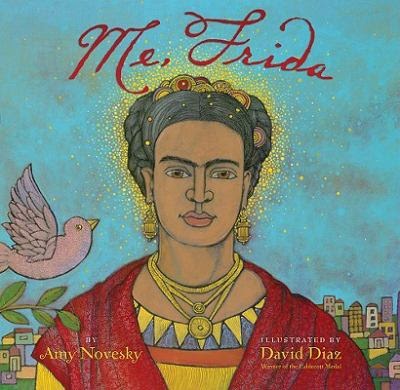
Me, Frida

Me, Frida
by Amy Novesky
Illustrated by David Diaz
Abrahms, 2010. 32 pgs.
Reading Level: ages 4-8
Hardcover: $16.95

Annotation: Meet Frida Kahlo as she makes her home in San Francisco in this beautifully illustrated volume worthy of the artist herself.

Summary: Frida Kahlo was born in Mexico and married the famous Mexican artist, Diego Rivera. She was a painter in her own right, but not as famous as her husband. When Diego was asked to paint several murals for the city of San Franciso, Frida accompanied him on the journey to the United States. Diego and Frida toured the city together as Diego searched for inspiration for his murals. However, Frida did not enjoy her time in the foggy city at first and whenever the two went to parties, Frida stayed small and silent beside her giant, ebulliant husband. After awhile Frida went exploring on her own and began to see the beauties the city had to offer. She gained more confidence and one day she burst into song, regaling the crowd with traditional Mexican folksongs. After that she went home and began her famous wedding portrait of Diego and herself. This was the first painting in Frida's new style, which is intimate and folkloric than her previous works had been and it has become one of her most beloved works of art.

Evaluation: Diaz's illustrations and Novesky's prose complement each other perfectly in this gorgeous biography of Frida Kahlo. Even though the illustrations are reminiscent of Kahlo's works--the cover is particularly similar to many of Frida's self-portraits--Diaz utilizes his own style. Each page is completely washed in a variety of colors that drip and swirl artistically together as only watercolors can do.  Diaz uses bright, deep jewel tones to celebrate Frida and her rich Mexican heritage. The colors range from deep blues and greens to vibrant oranges, violets and golds. He captures Frida's unique style of clothing and her iconic braids and each page is a new and fancifal scene in the life of these two famous artists. I especially loved the scene where Frida and Diego "fly" to San Francisco. The two are pictured flying through the air, holding hands with their eyes closed and heads raised to the wind as Frida clutches a suitcase in one hand. It opens the imagination and points out the humor and the nuances of the term, "fly". Above all, the book gives children a small taste of Kahlo's life and should encourage their interest in art history and instill a desire to learn more about this amazing woman.

Significance: Frida Kahlo is a celebrated artist and an important icon in art history. This biography introduces children to the wonder of Kahlo and teaches them that you can make your own dreams come true, even if there is someone in life who overshadows you.

Personal Choice: I used to teach a Humanities/English class and we were studying The House on Mango Street when I needed to find some artwork to complement the reading unit. I found the paintings of Frida Kahlo and Diego Rivera worked perfectly and since then they have always been artists of interest to me. I also began reading The Lacuna by Barbara Kingsolver in which the main character meets and works with both Frida and Diego and my interest was flamed even further.

Awards: Pura Belpre Illustrator Honor Book, 2011

Ling & Ting: Not Exactly the Same

Ling & Ting: Not Exactly the Same
by Grace Lin
Little, Brown & Company, 2010. 48 pgs.
Reading Level: ages 4-8
Hardcover: $14.99

Annotation: It's fun to be a twin, but just because you look alike, it doesn't mean you are exactly the same.

Summary: Ling & Ting are Chinese-American girls who happen to be twins; however, they are quick to assure us that they are not exactly the same even if they look very, very similar. In the first chapter the twins receive a haircut and Ling sits very still, but Ting sneezes as her hair is being cut which causes the barber to cut a large chunk from Ting's bang. Now the girls are easy to tell apart. Then Ling & Tings have several adventures involving magic tricks, making dumplings, eating with chopsticks and going to the library. It's fun to be a twin and the girls vow to stay together always, even when a king gets involved.

Evaluation: This chapter book is a nice addition to a young reader's collection. The pictures are bright and colorful and I especially loved the humorous beginning and ending pages. Ling & Ting are grabbing sodas and popcorn at the beginning and the caption reads "Shhh! It is starting! -- "Oh No! Are we late?". The last page shows the girls with their drinks as one says, "Was that the end?" and the other replies "No, this is!" as if the girls are telling us the story of their lives and wanting a front row seat of the action. The girls are really darling and have different personalities which the stories showcase, demonstrating that even when people look alike on the outside they can be different on the inside and still remain friends.

Significance: The book honors a multicultural heritage in that the twin protagonists are Chinese-American. There is a chapter featuring the children making chinese dumplings which introduces young readers to an important element of Chinese culture.

Personal Choice: What can I say, I've always had a fascination with twins that started with the Bobbsey Twins and always wished to have a set some day. Sadly, I'll have to be content with those found in books. :)

Awards: Theodor Geisel Honor Award, 2011

Tuesday, March 22, 2011

26 Fairmount Avenue

26 Fairmount Avenue
written and illustrated by Tomie De Paola
G.P. Putnam's Sons, 1999. 57 pgs.
Reading Level: ages 9-12
Hardcover: $13.99

Annotation: Tomie can't wait for his new house on 26 Fairmount Avenue to be built, but will the big hurricane of '38 make his family's dreams disappear?

Summary: Tomie is 4 years old and his life is full of interesting adventures. It all begins with the big hurricane of 1938. Tomie and his family are living in an apartment and are hoping the big twister doesn't take their new house with it when it goes. Luckily, it's still standing and each chapter in the rest of the book details the interesting, funny adventures that little Tomie experiences as a boy. His mother takes him to see the first ever animated Walt Disney movie, Snow White and the Seven Dwarfs (at which he is disappointed that Walt hadn't read the book correctly). Tomie goes to kindergarten only to find out they don't teach you to read until first grade and thus immediately leaves in order to wait for next year. He visits with his Great-grandma nana (who is incidentally tied to a chair so she doesn't fall out) and they both happily consume chocolates only to find out later they just ate an entire package of laxatives. There are several other adventures, just as delightful as those, and it all ends with Tomie and his brother moving into their new home on 26 Fairmount Avenue.

Evaluation: In this splendid chapter book by De Paolo, the author creates a humorous and perfectly charming rendition of his own boyhood. He has wonderful stories to tell: the hurricane of 1938, watching the first Disney animation at the movies, his family's adventures building a new house and watching the year 1940 come in. It's gentle, engaging and a real treat that children today can exclaim over and make comparisons between their childhood and De Paolo's.

Significance: De Paolo grew up in a different era, but he takes some interesting experiences he had as a child and manages to make them appealing, verbally and visually, to children in the present day.

Personal Choice: I loved the idea of De Paolo naming the book after the house he lived in as a child. I think it's so much fun and so delightful when people name their houses (confession--my house is named Briar Rose Cottage).

Awards: Newbery Honor, 2000 / Wilder Winner, 2011

Friday, March 4, 2011

Ballet for Martha: Making Appalachian Spring

Ballet for Martha: Making Appalachian Spring
by Jan Greenberg and Sandra Jordan
Illustrated by Brian Floca
Flashpoint, 2010. 48 pgs
Reading Level: ages 9-12
Hardcover: $17.99

Annotation: Learn about the inspiration behind Martha Graham's most famous ballet in this beautifully illustrated work of poetic luminance.

Summary:  For more than 60 years, audiences have delighted in Martha Graham's famous ballet, Appalachian Spring. Ballet for Martha tells the story of it's creation and the collaboration that took place between three amazing artists: the famous musician Aaron Copland, Martha herself and the artist, Isamu Noguchi. This informative children's book traces the history of a new kind of ballet, where the "legend of American living" was to be danced out on stage, celebrating Springtime and the marriage of a young pioneer couple. Copeland's famous musical score lent the ballet inspiration and his penned notation at the top of the music "Ballet for Martha" lent the book it's name. Each stage of the ballet's creation is documented, from the costume choices and stage design to the reception the ballet received on opening night in 1944.

Evaluaton: Brian Floca's lustrous watercolors perfectly complement the stunning and poetic cant of this fascinating history of Martha Graham's Appalachian Spring. The title is a welcome addition to history in general and the arts specifically, finishing with wonderful biographies of all three collaborative artists: Martha Graham, Aaron Copland, and Isamu Noguchi. It is an outstanding work of nonfiction and much deserves the Siebert Honor.

Significance: Appalachian Spring enjoys a loving and prominent place in the history of modern ballet and Copeland won the Pultizer Prize with this famous musical score. This book is a beautifully rendered history of a significant event in the history of the arts and deserves a prominent place in any library.

Personal Choice: Having a background in ballet and modern dance I was anxious to read more about Martha Graham and learn about her famous Appalachian Spring. I love Aaron Copeland's music and was thrilled to learn more about his use of "Tis a Gift to be Simple..." in the ballet score.

Awards: Robert F. Siebert Informational Book Honor, 2011

Friday, February 25, 2011

One Crazy Summer

One Crazy Summer
by Rita Williams-Garcia
Amistad, 2010. 224 pgs.
Reading Level: ages 9-12
Hardcover: $15.99

Annotation: As three young sisters set off to visit a mother they barely remember, they can’t imagine the craziness that awaits them.

Summary: Delphine (11), Vonetta (9), and Fern (4) are going to visit Cecile in Oakland, California this summer. Cecile is the woman who gave birth to them, but they never refer to her as their mother because what kind of mother leaves her toddlers and newborn child to fend for themselves? However, their Pa insists they meet her and so they leave the familiarity of New York for the glamour they feel sure is waiting for them in California, home to movie stars, Disneyland and all sorts of amazing adventures. But when Cecile barely acknowledges them at the airport, won’t cook them dinner and never allows them into her kitchen, they know this summer is not going to be what they expected. With no warmth and lots of crazy talk, Cecile sends them to the Center each morning for breakfast, angrily reminding them not to return until dark. At the Center the three black sisters encounter “The Panthers”, a black power movement formed to ignite a revolution and give power back to the people. Charged with the care of her younger sisters, Delphine is wary of becoming involved in such a dangerous cause, but somehow they are pulled into it anyway. But it is through this experience that Delphine and her sisters will finally come to know and understand the woman who is their mother.

Evaluation: One Crazy Summer is a smashing success. Told from the perspective of 11-year-old Delphine, who is equal parts naiveté and wisdom and robust enough a character to ensure that she’ll make a permanent home in your heart. It’s beautifully written with a prodigious sprinkling of humor and the prose will knock you out of your seat. Jacqueline Woodson writes, it “absolutely blew me away.” Williams-Grace presents real characters, real problems and real resolutions. Fantastic research, coupled with engaging characters and a intriguing plot make this book an important addition to the civil rights literature and a must read for everyone.

Significance: Set during the civil rights movement, One Crazy Summer highlights “The Black Panthers” organization and their operations during this tumultuous time period. The book emphasizes an important era in history and highlights the significant contribution that children made and can make in changing our world for the better

Personal Choice: Not only had this book won the Coretta Scott King, but it was also a Newbery Honor and so I knew it had to be something special. I wasn't disappointed in the list and this is now one of my top 5 recommendations for children.

Awards: Coretta Scott King Winner, 2011 / Scott O'Dell for Historical Fiction Winner, 2011/ Newbery Honor Award, 2011 / National Book Award for Young People's Literature Finalist, 2010

The Dreamer

The Dreamer
by Pam Munoz Ryan
illustrated by Peter Sis, read by Tony Chiroldes
Scholastic Press, 2010, 384 pgs.
Reading Level: ages 9-12
Hardcover: $17.99

Annotation: Far from being siple-minded, Neftali is merely dreaming up ways to use the beautiful words that he collects.

Summary: Shy and timid, Neftali Perez likes to read books and collect every interesting thing imaginable (including the words which he writes down on scraps of paper and saves in his dresser). However, Neftali is not strong and this, along his constant daydreaming, infuriates his father who runs the household like a tyrant. Neftali and his brother, sister and stepmother all jump whenever the train whistle sounds the impending arrival of this formidable man. Constantly battling his father's demeaning negativity, Neftali continues to dream and to write, winning school contests and penning love notes the neighborhood bully forces him to write to the prettiest girl in the village. A trip to the sea brings further conflict and Neftali is pulled between disgust for his father--who forces the children to swim in the cold, choppy waters until he blows his whistle--and the beauties of sitting on the sand and listening to the waves swoosh out to sea. But Neftali's uncle is sympathetic and a positive role model. As a newspaper man he encourages Nephtali's writing and introduces him to the plight of the native Mapuche people. In the end, despite his father's glowering opposition, Neftali is offered an internship at his uncle's newspaper and his first published essay is only the beginning of a long career for Chile's most beloved poet and politician.

Evaluation: To be successful, a book about the famous Pablo Neruda should be as beautiful as Neruda's poetry. Luckily, The Dreamer is just such a book. In a gorgeous collaboration, Ryan supplies the prose while Sis illustrates the book and introduces three magical drawings done in a pointellist style found at the beginning of each chapter, foreshadowing what is to come. Ryan's prose is rhythmic and poetic and a perfect compliment to the life of Neruda. While the biography is fictionalized, the magic and imagery Ryan use conveys a life of beauty and Nephtali / Neruda emerges as a sympathetic character the reader yearns to protect and champion. In short, Ryan manages to convey the wonder of a inquisitive, sensitive mind and demonstrates that dreaming isn't always a disdainful waste of time.

Significance: The book is a beautiful, magical--although fictionalized--introduction to the younger years of Pablo Neruda and it demonstrates that even with severe oppostition to your goals, if you perservere you can achieve wonderful things. In a society where doctors, lawyers and businessman are trumpeted, it is refreshing to see that the product of dreams isn't always measured by money. Moreover, the book fosters an interest in Neruda that will hopefully lead children to examine the beauty of his poetry.

Personal Choice: I fell in love with Pablo Neruda after watching Il Postino--which tells the story of a simple postman who learns to love poetry as he delivers Pablo Neruda's mail each day.

Awards: Pura Belpre Winner, 2011 / Children's Notables for Older Readers

Wednesday, February 23, 2011

The Graveyard Book

The Graveyard Book
by Neil Gaiman
Illustrated by Dave McKean
HarperCollins, 2008. 320 pgs
Reading Level: ages 9-12
Hardcover: $17.99

Annotation: When your parents are ghosts and you're raised in a graveyard, life is both a fascinating and frightening adventure.

Summary: Nobody Owens is the only living boy to make his home in an English village graveyard. After his parents and sister are killed by the man Jack, the littlest child toddles off to a nearby graveyard and at the insistence of his newly dead mother, a ghostly couple agree to adopt the child and raise him as their own. Christened Nobody, "Bod" is reared by his guardian, Silas, and the spirits whose bodies have been layed to rest in the graveyard. He makes friends amongst graveyard dead and leads a peaceful, fascinating life. The graveyard folk raise him as their own, with various spirits giving him lessons of sorts, not always useful to his current time-period, but superbly interesting nonetheless. The graveyard can be a dangerous place though, and after his encounter with a pack of hellhounds and night-gaunts, Bod barely escapes with his life. But one day a live girl enters the graveyard and the two become fast friends. However, it isn't until the girl finds herself back in Bod's life many years later that trouble begins and the man Jack manages to find Bod--setting out to finish the job he started on that long ago night.

Evaluation: Gaiman's work is an outstanding piece of literature and a pure delight of fanastical fiction with lovable characters. Macabre and humorous, the darkness of this ghost story is made light by the delicate touch Gaiman gives his ghostly souls. Humor abounds and the story is appealing to readers of all ages. Listening to the audio version only enhanced the experience, as Gaiman reads his story himself in a delicious English accent with all the right touches of ghostly delight and wry humor. An immenently bittersweet read and a real treasure to enjoy.

Significance: Gaiman tackles the complex world of the orphan and manages to create an enriching experience, teaching us the diffcult truth that sometimes friendships must end and that we must eventually make our own way in the world.

Personal Choice: I've been wanting to read this book ever since my friends and colleagues raved about it and I wasn't disappointed.

Awards: Newbery Winner, 2009 / ABA - Indies Choice - Best Indie YA Book Buzz, 2009

The Evolution of Calpurnia Tate

The Evolution of Calpurnia Tate
by Jacqueline Kelly
Henry Holt & Co, 2009. 340 pgs
Reading Level: ages 9-12
Hardcover: $16.99

Annotation: Calpurnia and her grandfather begin a scientific journey to discover a new species and end up building a lasting friendship.

Summary: Calpurnia Virginia Tate, known as Cally V to family and friends, is unconcerned with the normal feminine pursuits of her time. Growing up on a Texas cotton farm at the turn of the century means she should be baking pies, knitting and tatting, practicing the piano and generally learning how to comport herself as a young lady. But the great wide, outdoor world holds more wonder for Calpurnia than the promise of a "coming out" and so when brother Harry gives her a notebook to record her many observations, thus begins her career as a naturalist. Calpurnia's grandfather is scientist himself, always puttering about his laboratory at the back of the house and collecting specimens down by the river. When Calpurnia shyly reveals her interest in the great Darwin, a surprised Colonel Tate begins to take notice of his only granddaughter and the two begin practicing science together. They spend long, magical hours of exciting exploration, trying to create a recipe for distilled pecans, nurturing a caterpiller into a beautiful butterfly (which regretfully turns out to be a mammoth moth) and hoping that they really have discovered a new species of vetch. While the two naturalists patiently wait to hear back from the experts in Washington, Calpurnia and her six brothers romp and sweat in the magnificent Texas heat, experiencing all the glories and trials that a large family on the edge of the frontier were wont to have.

Evaluation: The Evolution of Calpurnia Tate is one of those rare treats that warms your heart and gladdens your soul. With prodigious research that creates a well-fleshed novel, Kelly explores the precocious character of Calpurnia Tate. Calpurnia is eminently lovable and your fondness for her will grow like the weeds she and grandfather are always documenting. Kelly nails the dialect and Calpurnia's voice is true. You'll delight in her first taste of coca-cola, her 3rd place ribbon at the town fair and each entry in her scientific journal. Excerpts from Darwin's Origin of Species grace the beginning of each chapter, encapsulating the events to come. Every encounter with her brothers, best friend Lula, her mother or Viola the cook add vibrant color and another enjoyable moment in Calpurnia's rich and varied Texas life. But it is the growing relationship between grandfather and granddaughter which tops off this solid read with a sweetness that mimics the apple pies Calpurnia is learning to bake. Deeply satisfying, Kelly's novel is a downright charmer and you'll want to rush out and buy your own copy. Highly recommended, The Evolution of Calpurnia Tate is destined for the classics list.

Significance: Ever the budding feminist, Calpurnia proves that girls can do more than just pursue housewifery skills, they can actually become scientists.

Personal Choice: A good friend, whose reading tastes I trust and admire, highly recommended the book and I'll be forever grateful.

Awards: Newbery Honor, 2010 / IRA Children's Book Award / IRA Teachers' Choices / CPL: Chicago Public Library Best of the Best / Illinois Rebecca Caudill Young Readers Choice Award Master List / North Carolina Young Adult Book Award / Texas Lone Star Reading List / TN YA Volunteer State Book Award ML / Vermont Dorothy Canfield Fisher Award Master List

Tuesday, February 22, 2011

The Wednesday Wars

The Wednesday Wars
by Gary D. Schmidt
Clarion Books, 2007. 264 pgs.
Reading Level: ages ages 9-12
Hardcover: $17.00

Annotation: Because Mrs. Baker hates his guts, Holling Hoodhood is being forced to study Shakespeare with her every Wednesday.

Summary: It's the turbulent 60's on Long Island and Holling Hoodhood is an average presbyterian in a town full of Catholics and Jews. He's in Mrs. Baker's class this year and while the rest of the students are off at Catechism or studying for their Bar/Bat Mitzvahs, Holling must stay indoors with Mrs. Baker. The problem is that Mrs. Baker hates his guts and forces him to read Shakespeare plays with her to pass the time.  As the town struggles with the Vietnam War, Holling struggles with his family, his dislike of Shakespeare and his feelings about Mrs. Baker. But, there might be more to Mrs. Baker than meets the eye as she gets him a part in a Shakespeare play, introduces him to some Yankee baseball players and serves as his running coach--having been an Olympic athlete herself. Holling finds that afterall, Shakespeare might have something to say about life and comes to understand and even like the guy, afterall he seems to understand what love and life are all about.

Evaluation: It's a brilliant coming-of-age story set during a difficult time in America's history and a book that everyone, and I mean everyone, should read. Each month of Holling's seventh grade year is a successive chapter in the book and so the reader moves along with Holling as he encounters a new adventure in his confusing life. Mrs. Baker is an absolute gem and teachers everywhere will delight in the fact that Schmidt presents her/them in such a glorious light. She is a friend, mentor, confidant and coach and the relationship between the two is genuinely touching. The book is engaging, inspiring and Holling is a character to love and commiserate with as he manuevers through what is often a very complicated time of life. The book tackles real life with equal parts humor and wisdom and I'm convinced Schmidt is a genius.

Significance: Schmidt deals with a multitude of real life situations. He discusses the difficulties inherent in the hatred and misunderstanding of the Vietnam War, real conflict between family members, a teacher who seems out to get you and the travails of middle school--when all you want to do is get through it unnoticed and without incidence.

Personal Choice: I'd heard rave reviews from friends and colleagues and being a Shakespeare fan myself, was extremely curious too see how the author would make the great man paletable to a younger audience.
Awards: Newbery Honor, 2008